
Why daily movement matters
Healthy movement is less about maintaining perfect posture and more about changing positions, using the body in varied ways, and avoiding long stretches of complete inactivity. For residents in Colonie, a typical day may include driving, desk work, household tasks, school activities, shopping, and seasonal outdoor chores. Each activity places different demands on the spine, joints, muscles, and balance system.
Adults generally benefit from moving more and sitting less throughout the day. Weekly activity goals can include 150 to 300 minutes of moderate aerobic activity, along with muscle-strengthening activity on at least two days. That movement does not have to happen in one long workout. Short walks, brief activity breaks, active household tasks, and several minutes of exercise can all contribute.
The most useful goal is consistency. A person who moves for a few minutes many times during the day may be better positioned to stay comfortable than someone who sits for most of the day and tries to compensate with occasional intense exercise.
How can someone reduce the effects of prolonged sitting?
Frequent position changes are more helpful than trying to hold one “perfect” sitting posture for hours. During work, driving, studying, or screen time, stand up, walk briefly, or change the angle of the hips and knees at regular intervals.
Practical options include:
- Standing during part of a phone call
- Walking to get water instead of keeping a bottle within reach
- Taking a brief lap around the home or workplace between tasks
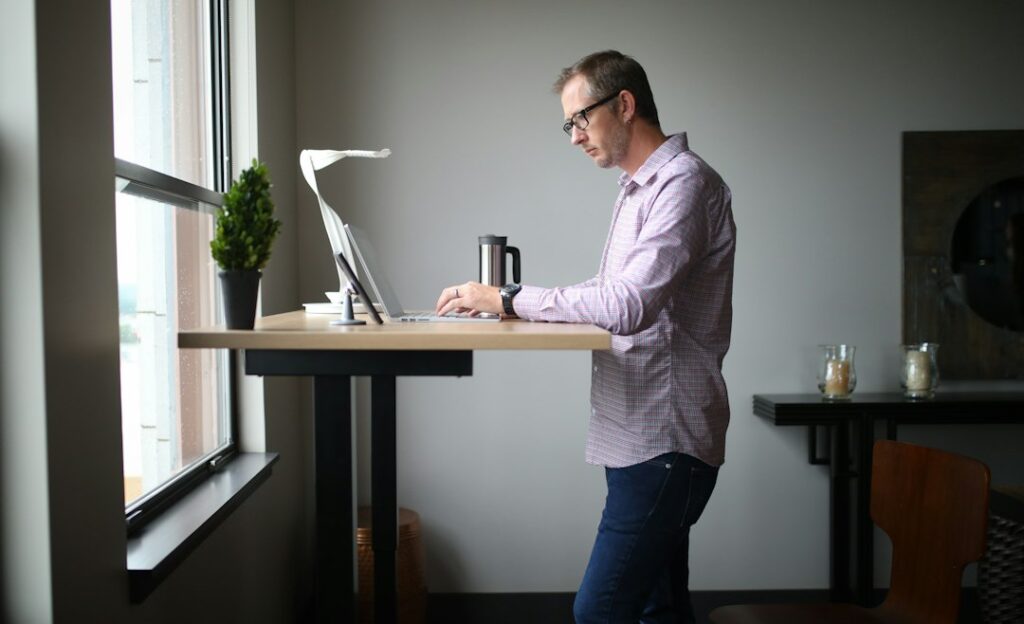
- Alternating sitting with standing while reading or using a computer
- Performing gentle shoulder, ankle, or hand movements during natural pauses
- Parking slightly farther away when conditions and safety allow
There is no universal number of minutes that every person must sit before moving. A useful rule is to avoid waiting until the body feels stiff or sore. A brief movement break taken early is usually easier than trying to loosen up after several hours of inactivity.
What does a comfortable computer setup look like?
A workstation should allow the head, neck, arms, back, hips, and feet to remain supported without forcing the body into one rigid position. The screen should be positioned so the head stays relatively level rather than bent forward for long periods. The keyboard and mouse should be close enough that the elbows remain near the sides, the shoulders stay relaxed, and the wrists remain fairly straight.
A supportive setup often includes:
- Feet resting on the floor or a stable footrest
- The lower back supported by the chair
- Knees roughly level with or slightly lower than the hips
- Elbows bent comfortably and close to the torso
- The monitor placed directly in front of the user
- Frequently used items kept within easy reach
- Enough legroom to change seated positions
A laptop used for long periods can encourage a rounded neck and raised shoulders because the screen and keyboard are attached. Changing positions regularly helps, and extended laptop work is often more comfortable when the screen is raised and a separate keyboard is used.
Even a well-arranged workstation is not a substitute for movement. The body is designed to shift, reach, stand, and walk.
How should people move during household and seasonal tasks?
Lifting, cleaning, gardening, and outdoor maintenance are safer and more comfortable when the task is paced instead of rushed. In Colonie, seasonal changes can shift household activity from snow and ice management in winter to yard work, gardening, and outdoor recreation in warmer months. These tasks may involve repetitive bending, twisting, reaching, gripping, or carrying.
Before starting a demanding task, spend a few minutes walking and making gentle movements through the shoulders, hips, knees, and ankles. This is not a requirement for an elaborate stretching routine; it is simply a way to transition from rest to activity.
While working:
- Keep loads close to the body when carrying them.
- Turn with the feet rather than twisting repeatedly through the spine.
- Divide heavy or awkward loads into smaller amounts.
- Use both hands when possible.
- Alternate sides during repetitive tasks.
- Change activities before one muscle group becomes exhausted.
- Take breaks in a warm, dry place during cold weather.
- Be cautious on wet, icy, uneven, or cluttered surfaces.

A common misconception is that discomfort always means a task must be stopped immediately, or that pain should always be pushed through. Mild fatigue may improve with rest and a position change, but sharp, worsening, radiating, or unusual symptoms deserve more caution.
What are simple ways to improve walking and standing?
Walking is a practical form of movement because it supports circulation, endurance, coordination, and general mobility without requiring specialized equipment. A comfortable pace is one at which conversation is possible, although breathing is somewhat faster than at rest.
Start with a duration that feels manageable. Someone who has been inactive may begin with several short walks rather than attempting a long distance. Indoor walking can be useful during icy conditions, heavy snow, extreme heat, or poor air quality. On safer days, outdoor walking provides a change of scenery and may make regular movement easier to maintain.
Standing for long periods can also cause discomfort if the body remains fixed. Shift weight between the feet, take a few steps, bend the knees gently, or place one foot on a low stable surface for brief periods. Supportive footwear and attention to slippery surfaces are particularly relevant during winter conditions.
How can movement fit into a busy day?
Movement is easier to maintain when attached to routines that already happen. Examples include walking briefly after meals, doing a few mobility exercises after brushing the teeth, taking the stairs when appropriate, or standing during a scheduled break.
A simple daily pattern might look like this:
- Morning: walk around the home and perform gentle joint movements before beginning work.
- Midday: take a short walk or complete a few minutes of light activity.
- Afternoon: change position during computer tasks and avoid remaining in one chair for the entire work period.
- Evening: perform household activities at a steady pace and take a relaxed walk if conditions permit.
The purpose is not to turn every part of the day into exercise. It is to create regular opportunities for the body to move in different directions and at different intensities.
When should discomfort be evaluated?
Temporary stiffness after inactivity or unfamiliar activity is common, but symptoms should not be ignored when they are severe, persistent, or progressively worsening. Prompt medical attention is appropriate for sudden weakness, loss of bladder or bowel control, numbness in the groin area, severe injury, unexplained fever with significant pain, chest pain, or trouble breathing.
For less urgent concerns, keeping track of what triggers symptoms can be useful. Note whether discomfort changes with sitting, walking, lifting, sleeping, or a particular activity. That information can help clarify whether the issue is related to workload, position, recovery, or a separate health condition.
Healthy movement is built from repeated, manageable choices: change position, walk when practical, use neutral and supported postures, pace demanding tasks, and respect warning signs. These habits can make ordinary work, travel, household responsibilities, and seasonal activities more comfortable throughout the day.
